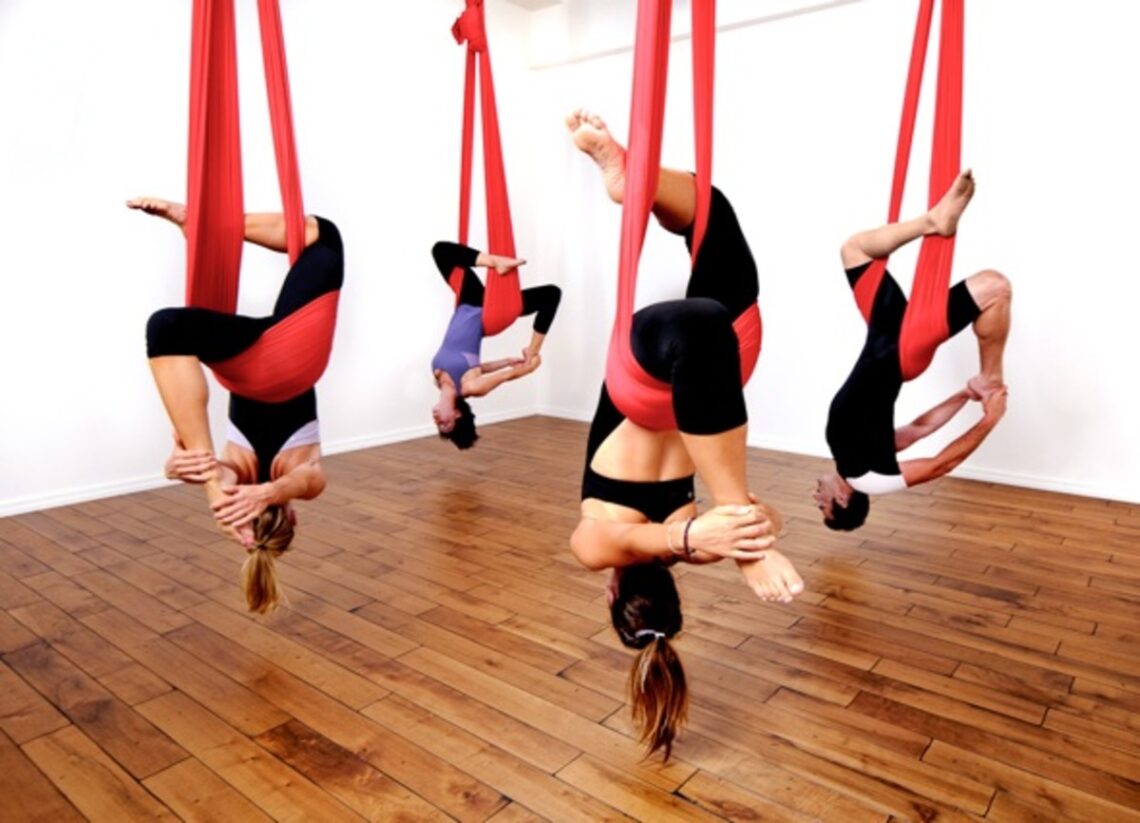
The concept of a competitive moat, the durable advantage that protects a business from competitive displacement, is as applicable to boutique fitness studios as it is to technology companies or manufacturing businesses. In Singapore’s yoga market, where the barriers to entry for a basic mat yoga studio are relatively low and where competitive differentiation through teaching quality alone is difficult to sustain at scale, the studios that have invested in specialty equipment formats have created a qualitatively different competitive position from those operating without physical infrastructure differentiation. aerial yoga is the most commercially significant of the specialty equipment formats in Singapore’s yoga landscape, and the investment logic behind studio decisions to incorporate aerial capability is worth examining in detail for both its financial mechanics and its strategic implications.
The Capital Investment Barrier as a Market Structure Factor
The equipment required for a credible aerial yoga programme represents a capital investment that is substantially higher than for any mat-based yoga format. The installation of a proper aerial yoga rigging system requires structural engineering assessment of the ceiling or roof structure to verify load-bearing capacity, the installation of certified rigging points that can safely support the dynamic loads of aerial practice, and the purchase of the hammocks, carabiners and other hardware that constitute the aerial apparatus. Beyond the rigging infrastructure, the physical studio space for aerial classes requires ceiling height that most standard commercial spaces do not provide without structural modification.
This capital barrier creates a market structure effect that benefits operators who have made the investment. A new entrant wishing to compete directly in the aerial yoga format faces the same capital requirements that the established aerial studio faced when it built its infrastructure, plus the cost disadvantage of not having the brand recognition and community that the established operator has built during its operational period. This means that the established aerial studio enjoys a meaningful first-mover advantage that mat-format studios cannot claim, because the mat format has no equivalent capital barrier.
The ongoing maintenance costs of aerial equipment add a further dimension to the competitive barrier. Aerial hammocks require regular inspection and periodic replacement based on usage cycles and load history. Rigging hardware requires certified inspection according to established safety standards. These ongoing costs are operationally manageable for an established studio with adequate revenue to cover them, but they represent an ongoing commitment that maintains the cost differential between aerial and mat-format operations in ways that protect the aerial studio’s differentiated market position.
Pricing Power and Revenue Per Class Hour
The capital investment and operational complexity of aerial yoga create the conditions for pricing power that mat-format studios cannot sustainably claim. Practitioners attending aerial classes are paying for an experience that requires significant fixed infrastructure, specialist teacher training and ongoing safety management that standard yoga classes do not require. The price premium that aerial yoga commands in Singapore’s market, relative to mat yoga, is not arbitrary. It reflects genuine cost differences and the genuine scarcity of quality aerial provision relative to the population of practitioners interested in accessing it.
The revenue economics of aerial classes differ from mat classes in ways that matter significantly for studio financial planning. Class sizes are necessarily smaller in aerial formats due to the physical space required per rigging point and the safety management requirements of supervising multiple practitioners in aerial positions simultaneously. This means that the revenue per class is generated from fewer students, each paying a higher rate, rather than from a larger number of students at lower rates.
The revenue per class hour arithmetic works in the aerial studio’s favour when class occupancy is high, because the price premium per student more than compensates for the reduced class size relative to mat formats. When class occupancy is low, the premium pricing advantage is reduced and the higher fixed cost structure of aerial infrastructure becomes a greater burden relative to revenue. This means that the financial performance of aerial yoga programmes is more sensitive to occupancy rates than mat formats, and that building consistent demand for aerial sessions is a higher-priority operational challenge for aerial studios than for their mat-format equivalents.
Community Formation and the Aerial Yoga Social Premium
One of the most commercially significant but least financially quantifiable advantages of aerial yoga as a studio format is the strength and distinctiveness of the community it generates. Aerial yoga practitioners develop a shared identity around the novelty, challenge and physical experience of their practice that is more distinctive than the shared identity of mat yoga practitioners. The aerial studio community has a specific character, a combination of playfulness, physical courage and mutual support in challenging physical territory, that creates strong social bonds between its members and a strong attachment to the studio environment where those bonds formed.
This community strength has direct commercial implications. Aerial yoga communities exhibit retention rates that are among the highest in the boutique fitness market, because the social anchoring of the practice makes leaving feel like abandoning both a physical challenge progression and a meaningful social group simultaneously. The word-of-mouth acquisition that strong aerial communities generate is equally valuable: practitioners who are enthusiastic about a distinctive physical experience they regard as rare and special are highly effective advocates for their studio within their social networks.
The community premium of aerial yoga also creates resistance to the price-based competitive pressure that affects mat yoga studios most acutely. An aerial practitioner who has invested months in developing their practice capability, who has formed genuine friendships with their practice community, and who identifies with the specific character of their aerial studio community is not susceptible to switching on the basis of a cheaper class rate at a competing studio. The switching cost is not merely financial but social and developmental, which is exactly the kind of retention foundation that makes a studio’s revenue genuinely defensible.
The Corporate and Events Market for Aerial Yoga
Beyond the regular class revenue that forms the financial foundation of aerial studio operations, the specialty nature of aerial yoga creates access to commercial opportunities that mat-format studios cannot easily serve.
Corporate team-building events represent a significant and growing revenue stream for Singapore’s aerial yoga studios. The novelty, physical challenge and mutual support dynamics of aerial practice make it an unusually effective team-building activity for corporate groups seeking experiences that are genuinely different from the standard team lunch or escape room format. Corporate event bookings typically generate higher per-participant revenue than regular class bookings, occur outside standard class hours in ways that do not reduce regular programming capacity, and have the additional commercial benefit of introducing corporate participants to the studio as a potential regular customer.
Photography and content creation bookings are another specialty revenue stream that the visual drama of aerial yoga creates. The photogenic quality of hammock-based inversions and silk-suspended postures makes aerial studios attractive settings for wellness content creation, fashion photography and brand campaigns that require distinctive visual environments. These bookings generate revenue from the studio’s physical infrastructure during off-hours without requiring teaching staff deployment.
Yoga Edition reflects the strategic understanding that specialty equipment investment in aerial yoga is not simply a programme addition but a market positioning decision that creates a durable competitive moat, generates distinctive community formation and opens commercial opportunities that mat-format operations cannot access.